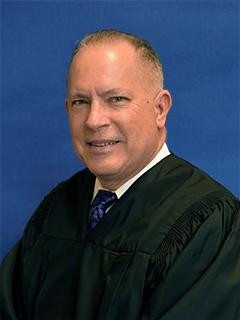
Judge Darren Dunifon Shull
Individual Rules, Standing Orders & Policies
- Rules last changed:

Limits & Logistics
Document Limits
Courtesy Copies
Case Law, Other Documents
E Filed Document
Court-wideJoint Pretrial Statement
Court-wideMotion, Notice of Hearing
Court-wide
Adjournments
- Any requested continuance of a specially set hearing must be properly noticed and set on the Court's uniform motion calendar, and no party may continue or cancel the hearing without court approval.
- A continuance request for the specially set hearing must be properly noticed and placed on the Court's uniform motion calendar, and the hearing may not be continued or canceled without court approval.
- Attorneys must seek postponement only in extremely rare circumstances and only for demonstrated good cause.
- +3 more
Request must include

Communication
Chambers
Phone
Phone
Clerk
Phone
Chambers
Clerk
Phone
Court-wideDuty Judge
Page & Word Limits1 rule
The Defendants and/or the Deponent will have seven (7) days to respond to the motion in a brief not to exceed five (5) pages.
- Response brief
- Up to 5 pages
Document Format Requirements29 rules
Before the hearing begins, each exhibit must be clearly marked with a numbered sticker in the upper-right corner identifying the case number and offering party.
Court's wording
All exhibits must be clearly marked before the hearing is set to begin. Exhibits shall be marked by a numbered sticker on the top right-hand corner of the front of each exhibit clearly identifying the case number and party who is offering the exhibit, e.g., Petitioner or Respondent.
The exhibit list must be numbered sequentially.
- Exhibit list
Formatting
- •Number the exhibit list sequentially
Exhibits MUST be bound; i.e. stapled, Acco-type fasteners, etc. Binders, clips, and rubber bands ARE NOT ALLOWED.
Loose photographs are NOT accepted. Photos MUST be individually marked and mounted.
Formatting
- •Loose photographs are not accepted
The exhibit tab must be filled out completely and legibly.
- Exhibits
Formatting
- •The exhibit tab must be legible
Place a numbered sticker on the top right hand corner of the front of each exhibit clearly identifying Plaintiff or Defendant.
All exhibits that will be entered into evidence must be pre-marked using the Tag/Template.
On the bottom center of each exhibit, place an Exhibit Tag/Template (see attached tag/template form). *Use Avery labels 22805 which can then be adhered to the page. (Template can be scanned onto Avery Labels or any colored paper.)
- Exhibits
Formatting
- •The template may be scanned onto Avery labels or any colored paper
Deposition(s) and Pleading(s) are NOT marked as exhibits, EXCEPT: 1. when the party would like the court to take judicial notice of any document or pleading; or 2. the document or pleading is published to the jury.
These exhibits must be marked for ID by using the Tag/Template.
Formatting
- •Qualifying depositions and pleadings must be marked for ID using the Tag/Template
Large demonstrative boards to be placed into evidence must be accompanied by a smaller version.
Photocopies of the note and mortgage, not originals, shall be utilized in evidence.
Neither the original note nor the original mortgage shall be attached to the demonstrative aid.
Exhibits must be stapled, bound or fastened together with an ACCO type fastener (two-pronged locking paper compressor).
- Binding
- Securely bound
- Exhibits
All orders/judgments which are to be recorded must provide a 3x3 blank space in the upper right hand corner of the first page.
JURY INSTRUCTIONS/VERDICT FORMS shall be submitted in WORD format.
- File type
- Word
- Jury instructions
- Verdict forms
Every physical exhibit must be premarked with specified identifying and admission information.
- Physical exhibits
Formatting
- •Premark with the date and case number
- •Include the exhibit number
- •Include a checkbox or line stating "Admitted into Evidence Yes or No."
- •State whether the item comes from Respondent or Petitioner
Court's wording
ALL Physical exhibits must be PRE-MARKED with Date, case number, submitted by Plaintiff or Defendant, exhibit number, check box or line "Admitted into Evidence Yes or No" and whether item comes from Respondent or Petitioner.
All proposed orders must be submitted in Word format and provided to opposing counsel and any self-represented litigant BEFORE being submitted to the Court.
- File type
- Word
- Proposed order
All Final Judgments must have a 3X3 inch space on the top-right-hand corner for recording purposes. The Clerk will not docket or record the Final Judgment without this space.
Submit all orders/judgments in WORD FORMAT (DO NOT use tables or macros for the style of the case or attorney names).
- File type
- Word
- Order
- Judgment
Proposed Final Judgments and/or Orders should be submitted via the Court's Online Services (OLS), in Word format and PDF format for Attachments, within five (3) days following the hearing.
- File type
- Word
- Proposed order
All exhibits must be clearly marked before the hearing is set to begin. Exhibits shall be marked by a numbered sticker on the top right-hand corner of the front of each exhibit clearly identifying the case number and party who is offering the exhibit, e.g., Petitioner or Respondent.
Any exhibit(s) with multiple sections should be designated by number and letter; i.e. 1a, 1b, 1c, etc.
Tape the card to the BACK of each exhibit (no clips).
- Exhibits
Formatting
- •No clips
NO RUBBER BANDS
Formatting
- •No rubber bands
NO PAPER CLIPS
Formatting
- •No paper clips
Exhibit #’s: No more than 10 characters including spaces
- Exhibits
Formatting
- •Exhibit numbers limited to 10 characters including spaces
NO NOTEBOOK BINDERS
Formatting
- •No notebook binders
Numbers and letters only: No symbols
Formatting
- •Numbers and letters only
- •No symbols
Document Filing Requirements33 rules
If the issue is resolved less than twenty-four (24) hours prior to the hearing (excluding weekends), the moving party shall appear before the Court at the scheduled time of hearing with their proposed order.
If the hearing issue is resolved within 24 hours of the hearing, excluding holidays and weekends, the moving party must either appear at the scheduled hearing time or contact the Judicial Assistant before uploading an agreed order.
Court's wording
If the issue which is the subject matter of the hearing is resolved prior to the hearing, contact the Judicial Assistant immediately for instructions on submission of a proposed order. If resolved less than twenty-four (24) hours prior to the hearing (excluding holidays and weekends), the moving party shall either: 1) appear before the Court at the scheduled hearing time; or 2) Contact the Judicial Assistant before uploading an agreed order resolving the subject matter of the hearing.
An Exhibit list shall be provided to the Court at the start of the hearing and must be numbered chronologically.
If the issue is resolved less than twenty-four (24) hours prior to the hearing (excluding weekends), the moving party shall appear before the Court at the scheduled time of hearing with their proposed order.
An updated, legible, and specific exhibit list MUST be provided to the trial clerk on the first day of trial.
Exhibit list which states “all”, “any” and “any and all” are not accepted.
A producing party must identify that a document was redacted, state what was redacted, and provide the basis for each redaction on the document, in metadata, or in a log.
Court's wording
The producing party shall clearly note when a document has been redacted for the above reasons only, what information has been redacted, and provide the basis for the redaction. The basis for each redaction may be specified either on the face of the document, in the metadata, or in a log.
Defense counsel must provide the examiner with a copy of this Order and explain the need for the examiner's compliance.
A party advancing a position on the plaintiff's standing must provide the court and every other party with a standing demonstrative aid at least five business days before trial begins.
Court's wording
Therefore, prior to trial in any foreclosure case, any party which advances a position on plaintiff’s standing shall prepare and at least five business days prior to trial commencement, provide to the Court and to each other party a demonstrative aid which demonstrates existence of or lack of standing by the plaintiff both immediately before filing of the complaint and at time of trial.
Plaintiff’s demonstrative aid shall specify under which of the three categories it claims to have standing.
A copy of the note showing indorsements and each allonge or assignment shall be attached to the demonstrative aid.
In other words, each side shall create a document which sets forth the timeline or chronology either establishing or disestablishing that the plaintiff is the (1) holder, 1 ===== PAGE 2 ===== (2) owner, or (3) non-holder in possession of the note with the rights of a holder.
Large demonstrative poster boards or items to be used in court for evidence must be accompanied by a smaller version for submissions to the Clerk.
All exhibits that will be entered into evidence must be pre-marked using the Exhibit Card Template (see attached) and affixed to the back of the exhibit.
Must have case #, party type circled, and exhibit#.
- Document
- Exhibits
Must include
- •Case #, party type circled, and exhibit #
The list is to include the Case #, the party name, party type (Pltf., Resp., Mother, Father, etc.), exhibit #, description of the exhibit and hearing/trial date.
An updated, legible, and specific exhibit list MUST be provided to the trial clerk on the first day of trial.
- Document
- Exhibit list
Must include
- •Updated, legible, and specific
Please be sure to attach a cover letter/cover sheet and the subject motion. The cover letter should certify that all parties have reviewed and agreed to the language of the proposed agreed order.
An emergency motion must include “emergency” in its title, be filed with the Clerk, and be marked emergency on the Clerk’s website.
- Document
- Emergency motion
Must include
- •Emergency
Court's wording
Your emergency motion must have the word emergency in the title of the motion and be sure to also file your motion with the Clerk of Court and check the emergency button on the Clerk's website so the motion is processed timely.
However, if there is a signed CONSENT from the Client, no hearing is necessary, HOWEVER the Attorney must upload a proposed Order Withdrawing and attach the signed consent from the Client.
- Document
- Motion to withdraw
Must include
- •Proposed order
All pleadings/documents must clearly indicate "RESIDENTIAL FORECLOSURE" under the case number.
- Document
- Residential foreclosure document
Must include
- •RESIDENTIAL FORECLOSURE
It is important for litigants not represented by counsel to fill out and file with the Clerk an email designation form.
If a motion(s) is resolved, an agreed order on that motion can be submitted to the Judges office through OLS and the Order must say "Agreed Order On Motion (Title of the Motion)".
The moving party is responsible for ensuring that the proposed order is uploaded after the Judge makes a decision on the presiding motion.
- Document
- Motion
Include
- •Proposed order
An Exhibit list shall be provided to the Court at the start of the hearing and must be numbered chronologically.
The provided exhibit card template must be used, either as a copy for each exhibit or as a scanned Avery 5163 label attached to the back of the page.
Court's wording
Use the exhibit card template provided (see attached); you may do one of the following: o Make copies of the card for each exhibit; or o Use Avery labels 5163 which can then be adhered to the BACK of the page. (Template can be scanned onto Avery Labels).
The exhibit card must be filled out completely and legibly.
Any exhibit with multiple sections should be designated by number and letter. i.e. 1A, 1B, 1C, etc.
An exhibits list which states “all”, “any” and “any and all” will not be accepted.
All exhibits must be marked for ID on the exhibit card.
Depositions and pleadings are NOT marked as exhibits, EXCEPT: o When a party would like the court to take judicial notice of any document or pleading; or o When the document or pleading is published to the jury.
The exhibits must be numbered sequentially.
Place a sticker on the bottom right hand corner of the front of each exhibit clearly identifying Plaintiff or Defendant.
Filing & Service rules
Electronic Filing Rules
Division AE does not accept hearing documents sent to the divisional email address.
Division AE does not accept emailed documents for hearings to the divisional e-mail.
Page 1 | B. Scheduling Procedures
Plaintiff must electronically file a Notice of Settlement with the Clerk and email an e-filed-stamped copy to the court.
Plaintiff shall e-file a Notice of Settlement with the Clerk of Court and shall submit an e-filed stamped copy to the Court via email to CAD-DivisionAE@pbcgov.org.
Page 1 | I. Setting Case for Trial
An attorney filing a compliant ex parte motion must submit the proposed order and an attached copy of the motion through OLS for judicial signature.
The moving attorney must submit the Order for signature by the Judge and a copy of the motion as an attachment via the Court's Online Services (OLS).
Page 1 | D. Submission of Orders and Judgments
Exhibits for Zoom hearings must be submitted electronically through the E-Evidence portal.
All Zoom hearings: Submit all exhibits electronically by E-Evidence portal.
Page 1 | G. Exhibits for Evidentiary Proceedings
Only a Notice to Set Trial, Notice of Settlement, or Jury Instructions/Verdict Forms may be electronically submitted to the court through the divisional email.
The only documents permitted to be e-served to the Court through the divisional CAD (CAD-DivisionAE@pbcgov.org) are: Notice to Set Trial; Notice of Settlement; and Jury Instructions/Verdict Forms.
Page 1 | D. Submission of Orders and Judgments
Filing Timing and Cure Windows
An agreed order resolving the hearing issue must be uploaded electronically to the divisional queue by 3:00 p.m. on the day before the hearing.
The agreed order must be uploaded electronically to the divisional queue by 3:00 p.m. the day before the scheduled hearing.
Civil cases
Page 1 | ORDER SPECIALLY SETTING HEARING
If the matter resolves less than 24 hours before the hearing, the moving party must either appear at the scheduled hearing or contact the Judicial Assistant before uploading an agreed order, which must be uploaded electronically by 3:00 p.m. on the preceding day.
If resolved less than twenty-four (24) hours prior to the hearing (excluding holidays and weekends), the moving party shall either: 1) appear before the Court at the scheduled hearing time; or 2) Contact the Judicial Assistant before uploading an agreed order resolving the subject matter of the hearing. The agreed order must be uploaded electronically to the divisional queue by 3:00 p.m. the day before the scheduled hearing.
Civil cases
Page 1 | ORDER SPECIALLY SETTING REMOTE HEARING
Within 45 days after the litigation and any appeals conclude, recipients must, at the producing party’s written request and the receiving party’s option, destroy or return all protected information.
Within forty-five (45) days after conclusion of this Litigation, including any appeals related thereto, at the written request of the Producing Party, such attorney and any person to whom he/she disclosed Confidential Information and/or Highly Confidential Information shall, including any experts and consultants, at the Receiving Party’s option, either (a) destroy or (b) return and surrender all Confidential Information and/or Highly Confidential Information produced pursuant to this Order, to the Producing Party.
Civil cases
Page 1 | K. DISPOSITION OF MATERIALS AFTER LITIGATION
Within 14 days after the notice of challenged information, the producing party must file a motion to protect confidentiality and identify documents no longer treated as confidential.
Within fourteen (14) days of the Notice of Challenged Information, the Producing Party must file a Motion to Protect Confidentiality and specify, if appropriate, which documents are no longer being maintained as confidential.
Civil cases
Page 1 | G.3.b
After notifying the receiving party of an inadvertent production, the producing party must provide corrected versions within 14 days.
The Producing Party shall produce corrected versions of the materials to conform the document to the appropriate designation within fourteen (14) days of the date they notified the Receiving Party of the inadvertent production.
Civil cases
Page 1 | F.2
Within seven days after the motion to protect confidentiality, the receiving party must file an opposition identifying any documents no longer challenged as confidential.
Within seven (7) days of the Motion for Protect Confidentiality, the Receiving Party must file an opposition and specify, if appropriate, which documents are no longer being challenged as confidential.
Civil cases
Page 1 | G.3.c
After receiving a confidentiality challenge, the producing party must provide a written explanation of the designation within 21 days if it does not change the designation.
After receipt of this written notification, the Producing Party will have an opportunity to review the designated material, to reconsider the circumstances, and, if no change in designation is offered, to explain, in writing within twenty-one (21) days of receiving such a challenge, the basis of the designation.
Civil cases
Page 1 | G.2
Within seven days, the producing party must file a reply identifying any documents no longer maintained as confidential.
Within seven (7) days, the Producing Party must file a reply and specify, if appropriate, which documents are no longer being maintained as confidential.
Civil cases
Page 1 | G.3.d
The standing demonstrative aid must be provided at least five business days before trial commencement.
Therefore, prior to trial in any foreclosure case, any party which advances a position on plaintiff’s standing shall prepare and at least five business days prior to trial commencement, provide to the Court and to each other party a demonstrative aid which demonstrates existence of or lack of standing by the plaintiff both immediately before filing of the complaint and at time of trial.
Civil cases
Page 1 | ALL RESIDENTIAL FORECLOSURE CASES
A notice of hearing must be filed and served immediately after hearing time is reserved.
A notice of hearing must be filed and served immediately after reserving hearing time.
Page 1 | B. Scheduling Procedures
An order setting a hearing must be uploaded immediately after hearing time is reserved.
The order setting hearing must be uploaded immediately after reserving hearing time.
Page 1 | B. Scheduling Procedures
A proposed order must not be submitted more than one day before a hearing on a matter the court has not yet decided, because it will be rejected.
Please DO NOT submit proposed orders more than 1 day in advance of a hearing on matters on which the Court has not yet ruled (the order will be rejected).
Page 1 | D. Submission of Orders and Judgments
Service and Proof of Service Rules
The writ must be promptly served and executed between 8:00 A.M. and 3:00 P.M., Monday through Friday, excluding legal holidays, and expires if not served within 180 days.
This Writ shall be promptly served and executed BETWEEN THE HOURS OF 8:00 A.M. AND 3:00 P.M., MONDAY THROUGH FRIDAY (LEGAL HOLIDAYS EXCLUDED), and shall expire and terminate if not served within one hundred and eighty (180) days from the date of this Order.
Civil cases
Page 1 | ORDER OF CONTEMPT AND WRIT OF BODILY ATTACHMENT
A motion concerning confidential information must be served on the defendants and deponent, while the underlying confidential information is disclosed only to the court.
The motion shall be served on the Defendants and the deponent, but the Confidential Information or Highly Confidential Information intended to be used at the deposition will only be disclosed to the Court.
Civil cases
Page 1 | D.5.a
A producing party may correct or withdraw an inadvertent confidentiality designation by serving written notice within 30 days after discovering the production error.
A Producing Party may designate as Confidential Information or Highly Confidential Information or withdraw such a designation from any material that it has produced by serving written notice to the Receiving Party within thirty (30) days following the discovery of the inadvertent production with incorrect designation or without designation.
Civil cases
Page 1 | F.2
When a pro se party is involved, an uploaded order must require the moving party to send the order or judgment to that party by U.S. mail.
In cases where there are self-represented (pro se) parties, the uploaded orders must include a provision that the moving party is required to furnish a copy of the order/judgment to the pro se party via U.S. Mail.
Page 1 | D. Submission of Orders and Judgments
An appropriate petition or motion must be filed with the Clerk, with a copy sent to the opposing side.
File the appropriate petition or motion with the Clerk of the Court, and send a copy to the opposing side.
Page 1 | A. Communications with the Judicial Office
Plaintiff's counsel must forward the e-served order to all defendants and file a notice of service.
The Court will e-serve the order to counsel for Plaintiff, who shall forward the order to all Defendants and file the required Notice of Service.
Page 1 | D. Submission of Orders and Judgments
Documents and orders may be emailed to a pro se party only after that party files an email designation; otherwise, they must be mailed by U.S. mail.
NOTE: Documents/Orders are only permitted to be e-mailed to pro se parties if the pro se party has filed a Notice of Email designation with the Clerk of Court, otherwise all documents/orders must be mailed to pro se parties via U.S. Mail.
Page 1 | D. Submission of Orders and Judgments
Final judgments and orders are electronically filed to parties, with mailing as the fallback for pro se litigants or attorneys lacking electronic service.
FINAL JUDGMENTS and Orders will be e-filed to all parties or mailed if there are pro se litigants or attorneys without e-service
Page 1 | D. Submission of Orders and Judgments
Courtesy Copy Requirements
Courtesy copies must be submitted no later than one day before the hearing or trial.
Courtesy copies must be submitted to the court no later than 1 day before any hearing or trial.
Page 1 | E. Courtesy Copies of Case Law and Other Documents
Required courtesy copies must be submitted to the court by U.S. mail or hand delivery to the judicial office.
Courtesy copies must be submitted to the court by U.S. mail or hand-delivered to the judicial office.
Page 1 | E. Courtesy Copies of Case Law and Other Documents
Sealing & Redaction Procedures
Any court filing that discloses or communicates confidential or highly confidential information must be filed under seal.
Any pleading, brief, memorandum, motion, letter, affidavit, exhibit, or other document filed with the Court that discloses, summarizes, describes, characterizes, or otherwise communicates Confidential Information or Highly Confidential Information must be filed with the Court under seal.
Civil cases
Page 1 | H. CONFIDENTIAL INFORMATION OR HIGHLY CONFIDENTIAL INFORMATION OFFERED AS EVIDENCE
A producing party may redact privileged, protected, personal data, data-protection, and other legally authorized information from produced documents and information.
Any Producing Party may redact from the documents and information it produces any matter that the Producing Party claims is subject to attorney-client privilege, work product immunity, a legal prohibition against disclosure, or any other privilege or immunity. The following information may also be redacted: i. personal identifying information, personal data, sensitive personal data, or other data a party believes in good faith to be subject to federal, state, or foreign data protection laws; and v. such other redactions as may now or hereafter be provided for by law or permitted by Order of this Court.
Civil cases
Page 1 | E. NON-PRIVILEGE REDACTION
Pre-Motion Conference Requirements
A party seeking exclusion under Daubert must file a motion specifically identifying the grounds for the challenge.
Any party seeking to exclude evidence under a Daubert analysis shall file a motion with the court specifically identifying the basis for the Daubert challenge.
Page 1 | H. Pretrial Procedures and Conferences
All Daubert motions must be scheduled and heard before the trial docket begins.
All Daubert motions shall be scheduled and heard prior to the commencement of the trial docket.
Page 1 | H. Pretrial Procedures and Conferences
Before filing a discovery motion or seeking court intervention, counsel must communicate in person or by telephone and make a genuine effort to compromise; the court encourages filing the objections alone when they are sufficient for ruling.
If a discovery dispute arises, counsel must actually speak to one another (in person or via telephone) and engage in reasonable compromise in a genuine effort to resolve their discovery disputes before seeking Court intervention. No discovery motions shall be filed until after the parties have engaged in this process. The Court encourages filing the discovery objections without a motion if the Court can simply review the Page 5 of 6 ===== PAGE 6 ===== request and objection in order to rule, thereby saving the parties unnecessary briefing and expense.
Civil cases
Page 5 | III. PROCEDURES FOR DISCOVERY DISPUTES — A. Pre-hearing Communication
Adjournment & Extension Requirements
Any requested continuance of a specially set hearing must be properly noticed and set on the Court's uniform motion calendar, and no party may continue or cancel the hearing without court approval.
Should either party require a continuance of this special set hearing, the matter is to be properly noticed and set on the Court's uniform motion calendar. Under no circumstances may the parties continue or cancel the hearing without approval of the Court.
Civil cases
Page 1 | ORDER SPECIALLY SETTING HEARING
A continuance request for the specially set hearing must be properly noticed and placed on the Court's uniform motion calendar, and the hearing may not be continued or canceled without court approval.
Should either party require a continuance of this special set hearing, the matter is to be properly noticed and set on the Court's uniform motion calendar. Under no circumstances may the parties continue or cancel the hearing without approval of the Court.
Civil cases
Page 1 | ORDER SPECIALLY SETTING REMOTE HEARING
A party seeking a continuance must file the appropriate motion and immediately set it on the court’s UMC docket through OLS.
If there is a need for continuance, parties must file the appropriate Motion to Continue Trial and set it immediately on the Courts UMC docket using the the Court's Online Services (OLS).
Page 1 | I. Setting Case for Trial
A motion to amend a DCMO must state the basis and timing of the need, opposition, the requested new date and agreement, and the actions and dates needed to meet it.
Motions to amend the DCMO must include: the basis of the need for the extension, including when the basis became known to the movant; whether the motion is opposed; the specific date to which the movant is requesting the deadline or projected trial period be extended, and whether that date is agreed by all parties; the action and specific dates for the action that will enable the movant to meet the proposed new deadline or projected trial period, including, but not limited to, confirming the specific date any required participants such as third-party witnesses or experts are available.
Page 1 | B. Scheduling Procedures
Attorneys must seek postponement only in extremely rare circumstances and only for demonstrated good cause.
All lawyers are reminded of their professional obligations pursuant to Fla. R. Jud. Admin. 2.545 to conclude litigation so soon as it is reasonably and justly possible to do so and to seek postponement only in extremely rare circumstances and only for demonstrated good cause.
Civil cases
Page 1 | ALL RESIDENTIAL FORECLOSURE CASES
Absent an agreement for a longer production period, a responding party that cannot complete production within 30 days after its response deadline should request an enlargement of time and include good cause and a proposed completion schedule.
The parties may agree to a longer period for production, without leave of Court. In the absence of agreement among the parties, if the production will not be completed within 30 days of the response deadline, a motion for enlargement of time should be filed by the responding party. The motion shall include a good cause explanation for why production cannot be completed within that time period, and a proposed schedule for completing the production.
Civil cases
Page 5 | D. Discovery Disputes
Chambers Communication Rules
When a case is ready for trial, an e-filed-stamped courtesy copy of the notice must be emailed to CAD-DivisionAE@pbcgov.org.
When a case is at issue and ready to be set for trial, e-mail an e-filed stamped courtesy copy to the Court as follows: CAD-DivisionAE@pbcgov.org
Page 1 | I. Setting Case for Trial
Judicial-office communications must be emailed to CAD-DivisionAE@pbcgov.org with the case number, case name, and relevant matter in the subject line.
All communications to the judicial office must be submitted by e-mail CAD-DivisionAE@pbcgov.org the subject line of any e-mail to the judicial office must contain the case number, case name, and relevant matter.
Page 1 | A. Communications with the Judicial Office
A person needing a disability accommodation must contact the ADA Coordinator at least seven days before the court appearance, or immediately if less than seven days remain; hearing- or voice-impaired persons should call 711.
If you are a person with a disability who needs any accommodation in order to participate in this proceeding, you are entitled, at no cost to you, to the provision of certain assistance. Please contact the ADA Coordinator, Palm Beach County Courthouse, 205 North Dixie Highway West Palm Beach, Florida 33401; telephone number (561) 355-4380 at least 7 days before your scheduled court appearance, or immediately upon receiving this notification if the time before the scheduled appearance is less than 7 days; if you are hearing or voice impaired, call 711.
Civil cases
Page 1 | ADA NOTICE
The moving party must contact the Judicial Assistant before uploading an agreed order when the matter resolves less than 24 hours before the hearing.
Contact the Judicial Assistant before uploading an agreed order resolving the subject matter of the hearing.
Civil cases
Page 1 | ORDER SPECIALLY SETTING REMOTE HEARING
Email communications with the Judicial Assistant are limited to scheduling matters.
Email communications with the Judicial Assistant are limited to scheduling matters.
Page 1 | A. Communications with the Judicial Office
Questions may be directed to the Clerk's office by telephone at (561) 355-2986.
If you have any questions, please do not hesitate to contact the Clerk’s office at (561) 355-2986.
Civil cases
Page 2 | EXHIBIT LIST REQUIREMENTS
Questions may be directed to the clerk’s office at 561-355-2986 from 8:00 a.m. to 4:00 p.m., Monday through Friday, excluding holidays.
If you have any questions, contact the Clerk’s office at 561-355-2986 between the hours of 8am – 4pm, M-F excluding holidays.
Civil cases
Page 1 | Exhibit Labeling Requirement
Self-represented litigants and attorneys excused from email service may communicate with the judicial office by telephone at (561) 355-1980.
Self-represented litigants and attorneys excused from e-mail service may communicate with the judicial office by telephone call (561) 355-1980.
Page 1 | A. Communications with the Judicial Office
Junior Lawyer Participation Incentives
The court encourages participation by less-experienced lawyers and instructs a party to give advance notice when a lawyer with three or fewer years of experience will argue, in which case multiple lawyers may argue for that party.
**B. Encouraging Participation by Less-Experienced Lawyers:** Ordinarily, only one lawyer for each party may argue at the discovery hearing. Nevertheless, the Court has a strong commitment to supporting the development of our next generation of lawyers. The Court encourages parties and experienced, seasoned attorneys to allow less-experienced practitioners the opportunity to argue in court. A party should advise the Court prior to the beginning of the hearing if a lawyer of 3 or fewer years of experience will be arguing the matter. In that event, the Court will allow multiple lawyers to argue on behalf of that party.
Civil cases
Page 6 | III. PROCEDURES FOR DISCOVERY DISPUTES — B. Encouraging Participation by Less-Experienced Lawyers