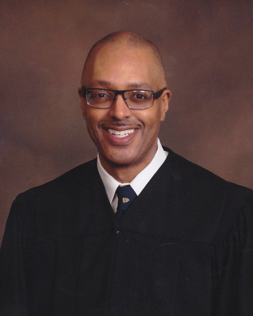
Judge George C. Hanks Jr.
Individual Rules, Standing Orders & Policies
- Rules last changed:

Limits & Logistics
Document Limits
Courtesy Copies
Filings >= 50 pages
- Promptly
Motion
- Within 3 Days
Trial Notebook, Exhibits
- 2 copies • At Least 4 Business Days Before Trial

Adjournments
- Motions to extend Docket Control Order deadlines or cut-off dates are not classified as emergencies.
- Extensions require good cause; first unopposed pre-deadline extensions usually granted, second case-by-case, third disfavored; post-deadline motions comply with FRCP 6(b)(2).
- Requests to modify Docket Control Order dates must include recommendations for all subsequent date adjustments.
- +1 more
Request must include

Communication
Clerk
Phone
Clerk
Chambers
Phone
Chambers
Page & Word Limits2 rules
The parties should file a joint letter that does not exceed 2 pages, outlining the issues.
- Letter
- Up to 2 pages
Without leave of Court, any motion, brief, or memorandum shall be limited to 25 pages, 13-point type-font, double-spaced, with 1” margins.
- Brief
- Up to 25 pages
- Format
- Double-spaced; 13-point; 1-inch margins
Exception
More pages with leave of court
Document Format Requirements15 rules
Do not submit a proposed order that contains a bare signature block.
- Proposed order
Formatting
- •Must not contain a bare signature block
Append copies of cited authorities only if not in commonly used resources or easily accessible on Westlaw/Lexis.
Court's wording
Please append copies of cases and the relevant parts of authorities that are cited only if the authorities are not found in commonly used resources such as the United States Code, United States Supreme Court Reporter, Federal Reporters, Federal Rules Decisions, Federal Supplement, Southwestern Reporter Second or Third, or Vernon=s Revised Statutes and Codes Annotated. Unpublished authorities that are easily available on Westlaw or Lexis also do not need to be provided to the Court.
Copies of supporting affidavits, deposition testimony excerpts, and other evidence relied upon in the motion, brief, or memorandum should be separately filed in one or more appendices.
contain a proposed order setting forth the relief requested by the movant. Orders should be in the form used by the Court, and should not contain any document system codes or client/matter billing numbers.
- Proposed order
Formatting
- •Must be in the form used by the Court
- •Must not contain any document system codes
- •Must not contain client/matter billing numbers
If the plaintiff fails to file the Joint Pretrial Order, then the defendant is responsible for filing the defendant=s portions of the Proposed Pretrial Order in the Joint Pretrial Order format.
Each disputed instruction, definition, or question should be set out in bold type, underlined or italics and identified as disputed.
d. Prior to the start of trial, the parties shall also submit the proposed charge electronically in Microsoft Word, by emailing it to the Case Manager.
- File type
- Word
- Proposed jury charge
a. Proposed Findings of Fact and email it to the Case Manager (electronically in Microsoft Word);
- File type
- Word
- Proposed findings of fact
Formatting
- •Submit electronically in Microsoft Word via email to Case Manager
b. Proposed Conclusions of Law and email it to the Case Manager (electronically in Microsoft Word); and
- File type
- Word
- Proposed conclusions of law
Formatting
- •Submit electronically in Microsoft Word via email to Case Manager
Offering parties should mark exhibits pre-trial with party name, case number, and exhibit number.
- Exhibit
Formatting
- •Include party's name
- •Include case number
- •Include exhibit number
Court's wording
The offering party should mark its own exhibits prior to trial and include the party=s name, case number, and exhibit number on each exhibit to be offered. (Example: Smith Construction, 3:10-cv-0010, Ex. 1.)
Each requested instruction, definition, and interrogatory must be numbered and presented on a separate sheet of paper with the citation and authority upon which counsel rely.
- Jury instruction
Formatting
- •Numbered
- •Presented on separate sheet of paper
- •Include citation and authority
Counsel should use a numbering system during the discovery process to allow for the orderly discussion of documents during the discovery and pretrial process.
Before producing documents under the Initial Discovery Protocols, the parties must meet and confer about the production format.
Court's wording
Prior to the production of documents by either Party to the other pursuant to the Initial Discovery Protocols, the Parties will meet and confer regarding the format (e.g. TIFF/text, searchable .pdf, Excel) for such production.
A form Joint Pretrial Order is attached. It should be followed, but may be adapted, within reason, to accommodate the size and nature of the case.
Recorded depositions should be edited to remove “dead air”.
- Deposition
Formatting
- •Edit to remove 'dead air'
Document Filing Requirements43 rules
If a partial or incomplete answer or production is provided, the responding party must state the reason that the answer or production is partial or incomplete.
All motions except motions pursuant to Federal Rules of Civil Procedure 56 must be accompanied by a separate proposed order.
- Document
- Motion
Must include
- •Proposed order
All motions must include a certificate of conference detailing conferring efforts, opposition status, and contact attempts if opposition is uncertain.
- Document
- Motion
Must include
- •Certificate of conference
Court's wording
All motions must contain a certificate of conference stating that counsel and pro se parties have conferred regarding the substance of the relief requested, and stating whether the relief is opposed or denied. In circumstances where opposition remains uncertain, the party filing the motion must make at least two attempts to ascertain whether the relief is opposed, and must provide a certificate of conference stating the number of attempts made to contact the opposing party, the method of those attempts (i.e., fax, e-mail, telephone call, postal mail), the date and time of the attempts, and the results obtained thereby. Even motions that may be unopposed, joint, or agreed by two or more parties require a certificate of conference.
Sealed documents in civil cases must be labeled with SEALED and the document title; docketing as solely 'SEALED DOCUMENT' requires court permission.
Court's wording
All pleadings or other documents filed under seal in a civil case must be identified as SEALED and by the title of the document. For example, a motion for summary judgment filed under seal must be docketed as “MOTION for Summary Judgment (SEALED).” No pleading may be filed for docketing simply as ASEALED DOCUMENT@ without advance permission of the Court.
All motions/briefs/memoranda must include specific sections; those with over 10 pages of argument require additional sections.
- Document
- Brief
Must include
- •Legal argument
- •Table of contents
Court's wording
Any motion, brief, or memorandum that has more than ten (10) pages of argument must contain the following items, while all motions, briefs and memoranda must contain items 3, 4, 6, and 7 below. 1. A table of contents with the page number of each section, including all headings designated in the body. 2. A short statement of the nature and stage of the proceeding. 3. A statement of the issues to be ruled upon by the Court and, with respect to each issue, a short statement (supported by legal authority) of the standard of review. 4. A short summary of the argument. 5. Succinct headings dividing the argument into separate points. 6. A short conclusion stating the precise relief sought.
All appendices should contain a table of contents, and courtesy copies of appendices or those filed conventionally (i.e., not electronically) should be tabbed at the right margin to facilitate location of the materials cited.
- Document
- Appendices
Should include
- •Table of contents
contain a proposed order setting forth the relief requested by the movant. Orders should be in the form used by the Court, and should not contain any document system codes or client/matter billing numbers.
Should include
- •Proposed order
Joint Pretrial Orders must be signed by all counsel.
c. Designations of deposition excerpts for witnesses being called by deposition. A copy of each deposition except must be provided to the Court.
e. Joint Trial Worksheet
a. Each requested instruction must be numbered and presented with authority.
a. Exhibit List (see attached form)
d. Objections, if any, to an opponent=s exhibits. Objections must be filed within the time limits set out by the Local Rules.
b. Witness List
Proposed jury charge must include minimum required instructions, use pattern jury instructions where possible, and deviations must be identified with legal authority.
Court's wording
b. The parties shall include in the proposed jury charge all necessary instructions or definitions. The instructions shall, at a minimum, include: (1) the prima facie elements of each cause of action and defense asserted, (2) legal definitions required by the jury, (3) items of damages, and (4) methods of calculation of damages. Counsel are to use the appropriate state law Patterns, or the Fifth Circuit Pattern Jury Instructions, as modified by case law or statutory amendments, whenever possible. Any deviations must be identified, and accompanied with legal authorities for the proposed deviation.
2. For Jury Trials, the parties must file a single, joint proposed jury charge, including all necessary instructions, definitions and questions.
e. The parties shall file a trial memorandum of law addressing the law governing the case and all contested issues.
b. Proposed Conclusions of Law and email it to the Case Manager (electronically in Microsoft Word); and
a. Proposed Findings of Fact and email it to the Case Manager (electronically in Microsoft Word);
c. Memorandum of Law. The memorandum of law, proposed findings, and proposed conclusions at a minimum should address the following: (1) the prima facie elements of each cause of action and defense asserted, (2) legal definitions, (3) components of damages, and (4) methods of calculation of damages.
if the parties, in good faith, cannot agree on all instructions, definitions, or questions, the parties should nonetheless submit a single, unified charge. Each disputed instruction, definition, or question should be set out in bold type, underlined or italics and identified as disputed. Each disputed item should be labelled to show which party is requesting the disputed language. Accompanying each instruction shall be all authority or related materials upon which each party relies.
Joint Trial Notebook must contain specified documents including Joint Pretrial Order, Exhibit Lists, Witness Lists, and others.
Court's wording
The Trial Notebook should be submitted jointly, and must contain the Joint Pretrial Order as well as each side’s Exhibit Lists, Witness Lists, Designations, Objections, Motions in Limine, Jury Charges (where applicable), Memoranda of Law, and Proposed Findings of Fact and Conclusions of Law (where applicable).
The offering party shall mark its name, the case number, and the exhibit number on each exhibit to be offered.
- Document
- Exhibit
Must include
- •Case number
List the parties, their respective counsel, and the mailing addresses, email addresses, and telephone numbers of counsel in separate paragraphs.
Joint Pretrial Order must include agreed statement of the case with names, dates, and places.
Include
- •Include names, dates and places
Court's wording
Give a brief agreed statement of the case for the information of the Court. The Court may read this statement to the jury panel to see whether any member of the panel is acquainted with the facts or parties in the case. Include names, dates and places.
Briefly explain why this Court has full and complete jurisdiction over the subject matter and the parties in this case. If there is an unresolved jurisdictional question, state the problem.
List all facts that have been stipulated to.
Delineate those legal propositions not in dispute.
Identify any pending motions, as well as the responses, replies, or objections.
Briefly state the issues of law in dispute.
List all factual disputes that are necessary to the final disposition of this case.
Along with this Joint Pretrial Order, each party or side should submit a memorandum of law to address these issues in more depth.
- Document
- Joint pretrial order
Should include
- •Legal argument
The Exhibit List should provide a clear, concise description of each exhibit, with a Bates number from the discovery process where applicable.
In separate paragraphs, give a concise statement of each party’s contentions and claims.
Joint Pretrial Order must include Exhibit List of all offered exhibits in form of Attachment A or similar.
Must include
- •Exhibit list
Court's wording
Each party must attach an Exhibit List (in the form shown by Attachment A or a similar form) of all exhibits offered, and all parties must provide copies of their listed exhibits to opposing counsel in advance of trial.
If a witness is to appear by deposition, cite the inclusive pages and lines to be read or submitted.
Include a statement addressing whether or not all settlement efforts have been exhausted, the current settlement demand and offer, and whether the case can reasonably be expected to settle.
Additional trial witnesses must be reported to opposing counsel ASAP, with exemption for unforeseeable rebuttal/impeachment witnesses.
Court's wording
In the event there are any other witnesses to be called at the trial, their names, addresses and the subject matter of their testimony must be reported to opposing counsel as soon as they are known. This restriction shall not apply to a purely rebuttal or impeaching witness if necessity of the witness or the testimony cannot reasonably be anticipated before trial.
List the names and addresses of witnesses who will or may be called, and include a brief statement of the subject matter and substance of their testimony, as required by Fed. R. Civ. P. 26(a)(3).
Include in this paragraph the following: (a) Whether trial will be Jury or Non-Jury; (b) Probable length of trial; and (c) Availability of witnesses.
Jury trials require proposed venire questions, jury instructions (numbered, separate sheet, citations), and memorandum of law.
Court's wording
For Jury Trials include the following: (a) Proposed questions for the venire panel. (b) Proposed jury instructions, definitions, and interrogatories. Each requested instruction, definition, and interrogatory must be numbered and presented on a separate sheet of paper with the citation and authority upon which counsel rely. (c) Memorandum of Law.
For Non-Jury Trials include the following: (a) Proposed Findings of Fact. (b) Proposed Conclusions of Law. (c) Memorandum of Law.
The Court discourages “catch-all” motions in limine. Instead, motions in limine should be directed to specific issues in the case and should relate to relief that is actually opposed.
Filing & Service rules
Filing Timing and Cure Windows
The Insurer must provide its Initial Discovery responses within 45 days after submitting a responsive pleading or motion, unless the court orders otherwise.
The Insurer’s Initial Discovery responses must be provided within 45 days after the Insurer has submitted a responsive pleading or motion, unless the court rules otherwise.
Civil cases
Page 7 | PART III: INFORMATION AND DOCUMENTS TO BE PRODUCED BY THE INSURER
Courtesy Copy Requirements
Fax or email delivery of documents to Chambers is prohibited unless the Court provides specific authorization.
Do NOT fax or email copies of documents to Chambers unless specifically authorized to do so by the Court.
Page 4 | COURTESY COPIES OF CERTAIN DOCUMENTS REQUIRED
Courtesy copies of documents 50 or more pages (including exhibits and attachments) must be promptly delivered to the Houston Clerk’s Office.
documents fifty (50) pages or more in length (including exhibits and attachments)
Page 4 | COURTESY COPIES OF CERTAIN DOCUMENTS REQUIRED
Courtesy copies of documents for matters being heard by the Court must be delivered to the Houston Clerk’s Office within three days of filing.
documents pertaining to matters being heard by the Court within three days after the document is filed
Page 4 | COURTESY COPIES OF CERTAIN DOCUMENTS REQUIRED
Two copies of the Joint Trial Notebook and each party’s exhibits must be submitted to the Court at least 4 business days before the first day of trial.
The Court requires 2 copies of a Joint Trial Notebook and each party’s exhibits be submitted to the Court at least 4 business days prior to the first day of trial.
Page 14 | REQUIRED PRETRIAL AND TRIAL MATERIALS
Sealing & Redaction Procedures
Designated Material filed with the Court is public unless a party moves to file it under seal, and this Order does not automatically seal it.
Any Designated Material which becomes part of an official judicial proceeding or which is filed with the Court is public. Such Designated Material will be sealed by the Court only upon motion and in accordance with applicable law. This Protective Order does not provide for the automatic sealing of such Designated Material. If it becomes necessary to file Designated Material with the Court, a party must move to file the Designated Material under seal.
Civil cases
Page 3 | 14
Filing Bundling Requirements
The Trial Notebook should be submitted jointly, and must contain the Joint Pretrial Order as well as each side’s Exhibit Lists, Witness Lists, Designations, Objections, Motions in Limine, Jury Charges (where applicable), Memoranda of Law, and Proposed Findings of Fact and Conclusions of Law (where applicable). If counsel are wholly unable to cooperate, then each side is responsible for ensuring that its own Trial Notebook and exhibit binders are submitted.
The Trial Notebook should be submitted jointly, and must contain the Joint Pretrial Order as well as each side’s Exhibit Lists, Witness Lists, Designations, Objections, Motions in Limine, Jury Charges (where applicable), Memoranda of Law, and Proposed Findings of Fact and Conclusions of Law (where applicable). If counsel are wholly unable to cooperate, then each side is responsible for ensuring that its own Trial Notebook and exhibit binders are submitted.
Page 14 | REQUIRED PRETRIAL AND TRIAL MATERIALS
All motions in limine must be filed with the pretrial order.
All Motions in Limine must be filed along with the Pretrial Order.
Page 26 | Additional Required Attachments
Generally, a motion should contain the legal argument and authorities and separate memoranda should not be filed.
Generally, a motion should contain the legal argument and authorities and separate memoranda should not be filed.
Page 10 | MOTIONS AND MEMORANDA OF LAW
Joint Exhibit List is encouraged where possible.
When possible, a Joint Exhibit List is preferred.
Page 24 | Exhibits and Exhibit List
Pre-Motion Conference Requirements
Pre-motion conference required before filing specified motions (except in habeas, prisoner, Social Security, Bankruptcy appeals), with mandatory 3-page pre-motion letter and optional 3-page response due within 5 days.
In all cases except habeas corpus/prisoner petitions and Social Security and Bankruptcy appeals, a pre-motion conference must be requested before filing: i. Any motion pursuant to Fed. R. Civ. P. 12; ii. Any motion for a change of venue; iii. Any motion to remand; or iv. Any motion to amend a pleading pursuant to FED. R. CIV. P. 15 where leave of court is required. The pre-motion conference may be held in person or by telephone, at the discretion of the Court. To request a pre-motion conference, a party shall file and serve a letter not to exceed three (3) pages in length setting forth the basis for the anticipated motion, and affirming that they have conferred with all parties regarding the relief to be requested. All parties may, but are not required to, serve and file a letter response, not to exceed three (3) pages within five (5) days from filing of the notification letter. The Court may act on the initial request before a response is filed. Rule 12(a) prescribes time requirements for the filing of answers and for the filing of motions permitted under Rule 12. For the purposes of these timing requirements, a pre-motion conference letter requesting permission to file a motion permitted by the Rule shall be considered the equivalent of the motion itself. Compliance with this procedure shall not be deemed a waiver of any parties’ defenses as to insufficient service of process or lack of personal jurisdiction.
Page 6 | MOTION PRACTICE
Pre-motion conference letters are not required for motions under Fed. R. Civ. P. 50, 59, or 60.
Note that these provisions do not apply to motions other than those specifically enumerated. For example, letters requesting pre-motion conferences are not required for motions pursuant to Fed. R. Civ. P. 50, 59 and 60, and counsel should be aware that the Court of Appeals will not accept an argument that compliance with district court motion rules should excuse noncompliance with Fed. R. App. 4.
Page 7 | Pre-Motion Conference Provisions
Parties must confer with opposing counsel on all motions to reach agreement on requested relief.
Counsel and pro se parties must make serious and timely efforts to confer with opposing counsel on all motions to try to reach agreements on the relief requested.
Page 7 | C. Requirements for All Motions
Any party wishing to make a discovery or scheduling motion should arrange for a conference with the Court before submission of any motion papers.
Any party wishing to make a discovery or scheduling motion should arrange for a conference with the Court before submission of any motion papers.
Page 8 | C. Requirements for All Motions
Unless the Court issues a briefing schedule, responses by the nonmovant must be filed within 21 days of the motion. Movant may file a reply within seven calendar days after the non-movant=s response. No further briefing, including supplements and sur-replies, should be filed without leave of Court. The Court will usually decline to consider such additional briefing. When circumstances dictate, the Court may consider and rule upon a motion prior to expiration of the 21-day period.
Unless the Court issues a briefing schedule, responses by the nonmovant must be filed within 21 days of the motion. Movant may file a reply within seven calendar days after the non-movant=s response. No further briefing, including supplements and sur-replies, should be filed without leave of Court. The Court will usually decline to consider such additional briefing. When circumstances dictate, the Court may consider and rule upon a motion prior to expiration of the 21-day period.
Page 8 | C. Requirements for All Motions
Counsel must confer in good faith to resolve discovery/scheduling disputes; if unresolved, must seek Court conference via joint letter with required content.
Counsel are responsible for conferring in good faith to resolve discovery and scheduling disputes. If counsel for the parties are unable to reach an agreement, a conference with the Court must be sought by a joint letter filed with the Court. The parties should file a joint letter that does not exceed 2 pages, outlining the issues. The letter MUST specify the date, time and place of the parties’ prior out- of-court discovery or scheduling discussion(s), the results of the discussions, and the names of all counsel or pro se parties participating therein. If counsel has been unable to confer because of the unavailability or unwillingness of certain counsel or pro se parties to do so, the statement shall recite the facts concerning attempts to confer.
Page 9 | DISCOVERY AND SCHEDULING DISPUTES
Separate requests for oral argument on motions are not required; the Court will notify counsel if oral argument is warranted.
Separate requests for oral argument on motions are not necessary. The Case Manager will notify counsel if the Court determines that oral argument would be beneficial.
Page 8 | C. Requirements for All Motions
Adjournment & Extension Requirements
Continuances and extensions are granted only at the Court’s discretion; joint agreements are not binding, and continuances for discovery disputes are rarely approved.
Agreements or joint motions among counsel for continuance or extensions of deadlines are not binding on the Court. Motions for continuance will be granted only at the Court’s discretion. The Court’s trial settings are usually firm, and continuances will rarely be granted because of discovery disputes.
Page 4 | CONTINUANCES
Extensions require good cause; first unopposed pre-deadline extensions usually granted, second case-by-case, third disfavored; post-deadline motions comply with FRCP 6(b)(2).
Counsel and pro se parties are directed to Federal Rule of Civil Procedure 6(b)(1), which allows extension of deadlines upon a showing of “good cause.” In most cases, the Court will be inclined to grant the first, unopposed motion to extend a particular deadline as a matter of courtesy, so long as that motion recites sufficient cause and is submitted before the deadline in question. Second motions for extension of time will be granted on a case-by-case basis. Third motions for extension of time are disfavored but will be granted in extraordinary circumstances. Motions made after a deadline should comply with Federal Rule of Civil Procedure 6(b)(2).
Page 8 | C. Requirements for All Motions
Requests to modify Docket Control Order dates must include recommendations for all subsequent date adjustments.
If a change to an existing Docket Control Order is requested, all parties shall submit recommendations for adjusting all dates in the Docket Control Order that follow the date sought to be modified.
Page 12 | 8. INITIAL PRETRIAL CONFERENCES AND DOCKET CONTROL ORDERS
Motions to extend Docket Control Order deadlines or cut-off dates are not classified as emergencies.
Motions for extension of deadlines or cut-off dates in the Docket Control Order are not emergencies.
Page 4 | EMERGENCIES
Chambers Communication Rules
Information about the status of documents, entry of orders, or docket entries should be obtained from the CM/ECF or Pacer Systems, or if absolutely necessary, from the United States District Clerk=s Office ((713) 250-5500).
Information about the status of documents, entry of orders, or docket entries should be obtained from the CM/ECF or Pacer Systems, or if absolutely necessary, from the United States District Clerk=s Office ((713) 250-5500).
Page 3 | CONTACT WITH COURT PERSONNEL
Correspondence with the Court must be sent to the Case Manager as follows: Kimberly Picota Case Manager to Judge George C. Hanks, Jr. United States Courthouse 515 Rusk St., Room 5300 Houston, TX 77002 Or by email: Kimberly_Picota@txs.uscourts.gov
Correspondence with the Court must be sent to the Case Manager as follows: Kimberly Picota Case Manager to Judge George C. Hanks, Jr. United States Courthouse 515 Rusk St., Room 5300 Houston, TX 77002 Or by email: Kimberly_Picota@txs.uscourts.gov
Page 3 | CONTACT WITH COURT PERSONNEL
Any case-related telephone and email inquiries should be made to the Case Manager. Inquiries should not be made to the Court’s law clerks, nor to the Judge.
Any case-related telephone and email inquiries should be made to the Case Manager. Inquiries should not be made to the Court’s law clerks, nor to the Judge.
Page 3 | CONTACT WITH COURT PERSONNEL
Emergency applications for immediate relief must be filed via CM/ECF with all communications routed through the Case Manager, including affirmation of opposing party contact.
Applications for immediate relief, including restraining orders, must be filed electronically through the CM/ECF system and all related communications with the Court must be through the Case Manager. Such applications shall be presented to the Court by the Case Manager following counsel=s affirmation that the opposing party has been contacted and that both parties can be available for a conference before the Court, or an explanation of why such contact has not been made.
Page 4 | EMERGENCIES
Out-of-town counsel must request telephone appearance via email to Case Manager with as much advance notice as possible; dispositive/contested motions and pro se matters are preferred in person.
Out-of-town counsel wishing to appear at a conference or hearing by telephone must submit a written request by email to the Case Manager as far in advance of the conference as reasonably possible. The Court will attempt to accommodate such requests, if feasible. The Court’s preference, however, is to set dispositive or contested motions in person. Counsel appearing by telephone should use a landline. Matters involving pro se parties will be heard in person, unless stated otherwise.
Page 5 | APPEARANCES AND CONFERENCES
Counsel and pro se parties must notify the Case Manager in writing immediately upon settlement of any matter before the court.
Counsel and pro se parties shall notify the Case Manager immediately in writing of the parties’ settlement of any matter before the court. Upon receipt of a notice that the entire case is settled, the Court may enter a conditional order of dismissal.
Page 5 | APPEARANCES AND CONFERENCES
Chambers staff will not take telephone messages for counsel or parties, and counsel are prohibited from requesting use of telephones in Chambers.
Telephone messages for counsel or parties will not be taken by the Judge=s staff, and counsel shall refrain from requesting use of telephones in Chambers.
Page 17 | Court Telephones
Counsel must immediately notify the Case Manager by letter or email upon settlement and file the notice on CM/ECF.
Upon settlement of any case, counsel must immediately notify the Case Manager in writing, by letter, or by email (cm4147@txs.uscourts.gov), and such notice shall also be filed on CM/ECF.
Page 19 | SETTLEMENTS AND ORDERS OF DISMISSAL
The Case Manager will not respond to casual telephone inquiries regarding the status of motions or cases.
The Court=s caseload does not allow the Case Manager to respond to casual telephone inquiries about the status of motions or cases.
Page 3 | CONTACT WITH COURT PERSONNEL
Junior Lawyer Participation Incentives
Court encourages lawyers with less than seven years of experience to conduct hearings, especially for motions they drafted or contributed to, to provide substantive speaking opportunities.
for young lawyers (i.e., lawyers practicing for less than seven years) to conduct hearings before the Court, particularly for motions where the young lawyer drafted or contributed significantly to the underlying motion or response. The Court believes it is crucial to provide substantive speaking opportunities to young lawyers, and that the benefits of doing so will accrue to young lawyers, to clients, and to the profession generally. Thus, the Court encourages all lawyers practicing before it to keep this goal in mind.
Page 9 | APPEARANCES AND CONFERENCES