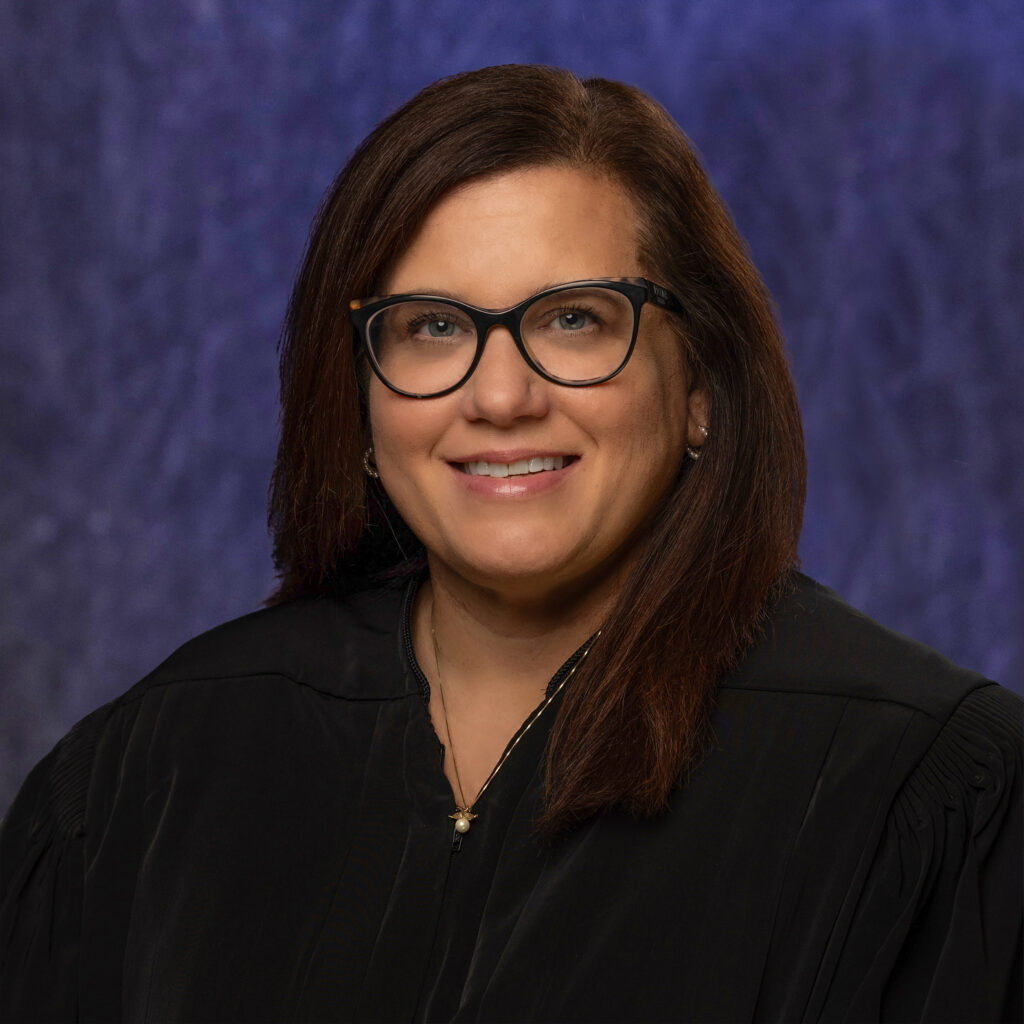
Judge Mary G. Jolley
Individual Rules, Standing Orders & Policies
- Rules last changed:

Communication
Chambers
Chambers
Phone
Chambers
Phone
Chambers
Document Format Requirements9 rules
All proposed orders following a hearing EXCEPT for Final Judgments of Foreclosure, shall be emailed to division32@circuit7.org in Microsoft WORD format.
- Proposed order
Formatting
- •Microsoft WORD format
- •Exception: Final Judgments of Foreclosure
Do not under any circumstances submit a proposed order simply entitled “Order.”
“Emergency” hearings must be requested with an appropriate motion and provided in hard copy to the Judge’s chambers under circumstances only where persons or property face the threat of imminent harm without court intervention.
- File type
- Paper
These items shall be provided in Microsoft Word format by email to kmccoy@circuit7.org.
Proposed orders should not contain law firm information, including internal file numbers, a bar code or other computer-generated code.
A proposed order should be titled “Order [Granting/Denying] [Plaintiff’s/Defendant’s] Motion to _______”.
Proposed orders should be sequentially numbered on the bottom center of each page with page numbering suppressed on the first page.
All exhibits must be pre-marked for identification by letter from A-Z, AA-ZZ, A3-Z3, etc.
Exhibits will be assigned a number upon admission into evidence.
Document Filing Requirements28 rules
A Notice of Hearing must be filed and served immediately upon reserving hearing time.
The Notice of Hearing must include: (a) an in-person, remote or hybrid designation; (b) the docket number (Dkt) and the filing date of the motion to be heard; (c) the amount of time reserved; and (d) the Zoom Meeting ID number.
An evidentiary hearing shall be identified as such in the Notice of Hearing.
Foreclosure Final Judgment packets must include all supporting materials and sufficient copies and stamped envelopes, and must be sent directly to Judicial Chambers at least five business days before the hearing.
- Document
- Foreclosure final judgment packet
Must include
- •Certificate of service
Court's wording
All proposed Foreclosure Final Judgment packets must (i) include all supporting documents, including exhibits and supporting affidavits; and (ii) be submitted a minimum of five (5) business days in advance of the hearing with sufficient copies and self- addressed, stamped envelopes for all parties listed in the certificate of service and be sent DIRECTLY TO THE JUDICIAL CHAMBERS.
Proposed orders must state that copies have been furnished by eService to each named attorney.
A Notice of Service must then be filed in the court file to reflect delivery of the order.
Proposed orders must be circulated among the parties BEFORE submission.
A motion to cancel a foreclosure sale must state specific reasons for postponement and include supporting documentation.
Court's wording
(b) the motion must contain specific facts setting forth the reasons for the postponement; (c) the motion must have supporting documentation attached (e.g. short sale contract, loan modification information, etc.)
Motions for Substitution of Counsel: Upon written motion, which includes the client’s written consent.
Unless there was a complete failure to respond or object, a discovery motion to compel must quote the disputed discovery request and the full allegedly insufficient response or objection and grounds in the motion itself; attachments alone are insufficient.
Court's wording
Unless there has been a complete failure to respond or object to written discovery requests, a Motion to Compel discovery must include in the body of the motion in quotation, each interrogatory, deposition question, request for admission, or request for production to which the motion is addressed, followed by quotation, in full, of the answer or response which is asserted to be insufficient, or the objection and grounds stated by the opposing party. Merely attaching the request and alleged deficient response to the motion will not suffice.
The motion must attach written consent from the client.
- Document
- Motion to withdraw counsel
Must include
- •Attach written consent from the client
It must also require the client to register for eService at myflcourtaccess.com.
The proposed order must direct that all future pleadings, orders, and other papers be served on the client at his or her last known address, which will be set forth in the order together with the client’s last known telephone number, and email address.
(d) the motion must be served on all parties, specifying all efforts made to contact all parties, and any agreement or objection to the relief sought.
Upon written motion stating the reasons for withdrawal, the client’s last known address, telephone number with area code, and email address; and notice to all parties and their client.
Following the expiration of the period allowed for the response, the movant shall advise the court that the motion is ripe for a decision and a submit a proposed order to division32@circuit7.org.
- Document
- Motion to compel
Must include
- •Proposed order
A motion to compel set for hearing must detail compliance with the governing discovery-dispute procedure or it will be stricken.
Court's wording
All discovery disputes are governed by Florida Rule of Civil Procedure 1.202 and In Re: Motions to Compel Discovery in Civil Actions CV-2022-004-SC. See https://circuit7.org/orders/cv-2022-004-sc/. A Motion to Compel set for a hearing must detail compliance with this procedure or it will be stricken.
A Notice for Trial must be filed and a copy of a file-stamped Notice for Trial to Division32@circuit7.org.
A party seeking a ruling without a hearing must file the specified notice with the motion to compel, and the opposing party has 15 days from service to respond in writing.
Court's wording
A party may seek a ruling without a hearing by filing a Notice of Request for Court to Consider Motion to Compel Discovery without Hearing contemporaneously with the Motion to Compel. The opposing party shall have fifteen (15) days from service of the Motion to Compel and Notice of Request to file a written response to the motion and notice.
The Notice of Trial must specify whether the trial is by jury or non- jury, and the expected length of the trial.
The listed pretrial materials must be submitted jointly, with any disputed questions, instructions, or verdict forms identified in the joint filing.
Court's wording
The parties shall submit joint juror questionnaire, proposed jury instructions, pretrial statement and verdict form(s) no later than docket sounding. Should parties disagree on certain juror questions, proposed instructions or the verdict form, the parties shall denote the competing question, instruction(s) or verdict form for which there is a disagreement within the joint filing.
The parties shall submit joint juror questionnaire, proposed jury instructions, pretrial statement and verdict form(s) no later than docket sounding.
Witness testimony at hearings or trial must be in person unless the parties agree and the Court approves; a party seeking audio-video testimony must file a motion under Rule 2.530.
Court's wording
All witness testimony at hearings or trial shall be in-person unless agreed upon by the parties and approved by the Court. If a party seeks to have a witness testify via audio-video communication technology, a motion must be filed in accordance with Rule 2.530, Fla. R. Gen. Prac. & Jud. Admin.
Motions In Limine: shall be heard prior to docket sounding and shall be limited to case specific anticipated evidentiary issues. Boilerplate motions in limine not addressing case specific anticipated evidentiary issues will not be considered.
The objection must state the specific reason(s) for the objection.
Requests for an examination must be in writing, and set forth the time, place, manner, conditions, and scope of the examination as well as the name and qualifications of the person conducting the examination, all with reasonable specificity.
A party may request a CMC or status conference, and the request must state why the conference is necessary and how much time it will need; early conferences are strongly encouraged in specified cases.
Court's wording
Any party may request a case management conference (CMC) or a status conference when a case requires. The Court strongly encourages the early use of pretrial conferences in more complex cases, multiple- party litigation, or any case that might benefit from court intervention. Any request for a CMC or status conference must articulate the reasons for the necessity of the conference, and the amount of time needed for the conference.
Parties calling a witness to testify via audio-video communications technology shall ensure the witness is provided a copy of the Court’s procedures governing Zoom appearances.
Filing & Service rules
Electronic Filing Rules
Proposed orders following a hearing, except Final Judgments of Foreclosure, must be emailed to the division address in Microsoft Word format.
All proposed orders following a hearing EXCEPT for Final Judgments of Foreclosure, shall be emailed to division32@circuit7.org in Microsoft WORD format.
Civil cases · Proposed or draft document; may not be in force
Page 4 | IV. Submission of Hearing Materials and Orders/Judgments, B. Orders and Judgments Format and Submission Method
Hearing materials, including motions, responses, and memoranda, must be delivered in hard copy to judicial chambers at least seven days before the hearing.
All hearing materials (including motions, responses, and memoranda of law/case law) must be delivered in hard copy at least seven (7) days before a scheduled hearing to judicial chambers.
Civil cases · Proposed or draft document; may not be in force
Page 4 | IV. Submission of Hearing Materials and Orders/Judgments, A. Deadlines
Final Judgments of Foreclosure cannot be submitted by email.
Final Judgments of Foreclosure WILL NOT be accepted by email.
Civil cases · Proposed or draft document; may not be in force
Page 5 | IV. Submission of Hearing Materials and Orders/Judgments
Original affidavits, notes, mortgages, default letters, allonges, and assignments must be sent directly to the Clerk’s Office.
Original affidavits, notes and mortgages, default letters, allonges, and assignments must be SENT DIRECTLY TO THE CLERK’S OFFICE.
Civil cases · Proposed or draft document; may not be in force
Page 5 | IV. Submission of Hearing Materials and Orders/Judgments
Materials of ten pages or less, excluding a cover letter, may be submitted by email to the judicial assistant.
Submissions of material ten (10) pages or less (excluding a cover letter) may be provided via email to kmccoy@circuit7.org
Civil cases · Proposed or draft document; may not be in force
Page 4 | IV. Submission of Hearing Materials and Orders/Judgments, A. Deadlines
Filing Timing and Cure Windows
Hearing materials must be delivered to judicial chambers at least seven days before the scheduled hearing.
All hearing materials (including motions, responses, and memoranda of law/case law) must be delivered in hard copy at least seven (7) days before a scheduled hearing to judicial chambers.
Civil cases · Proposed or draft document; may not be in force
Page 4 | IV. Submission of Hearing Materials and Orders/Judgments, A. Deadlines
Proposed orders must be submitted within seven days after a hearing unless the court directs otherwise during the hearing.
All Proposed orders must be submitted no later than seven (7) days after any hearing unless otherwise directed by the court during the hearing.
Civil cases · Proposed or draft document; may not be in force
Page 5 | IV. Submission of Hearing Materials and Orders/Judgments
Foreclosure Final Judgment packets must be submitted to Judicial Chambers at least five business days before the hearing.
All proposed Foreclosure Final Judgment packets must (i) include all supporting documents, including exhibits and supporting affidavits; and (ii) be submitted a minimum of five (5) business days in advance of the hearing with sufficient copies and self- addressed, stamped envelopes for all parties listed in the certificate of service and be sent DIRECTLY TO THE JUDICIAL CHAMBERS.
Civil cases · Proposed or draft document; may not be in force
Page 5 | IV. Submission of Hearing Materials and Orders/Judgments
A foreclosure hearing will not proceed unless the original documents are filed with the clerk by the hearing date.
No hearing shall go forward if the original documents are not filed with the clerk by the date of the hearing.
Civil cases · Proposed or draft document; may not be in force
Page 5 | IV. Submission of Hearing Materials and Orders/Judgments
A motion to cancel a foreclosure sale must be received by the Court at least five business days before the scheduled sale date.
Sales upon (a) a written motion received by the Court no less than five (5) business days before the scheduled sale date;
Civil cases · Proposed or draft document; may not be in force
Page 6 | V. Emergency and Other Urgent Matters
An objection to an examination under Rule 1.360(a)(1)(A) must be filed within 30 days of the written request if service of process occurred at least 15 days before the request was served.
Objection to “Examination of Persons” under Rule 1.360(a)(1)(A) must be filed no later than 30 days from the written request, assuming service of process has occurred at least 15 days prior to the request being served.
Civil cases
Page 1 | Request for, Objections to and Hearings
A hearing must be requested immediately on any filed objection; otherwise, the objection is deemed abandoned.
A hearing must be immediately requested on any objection filed. Failure to immediately set the objection for hearing will be deemed an abandonment of the objection.
Civil cases
Page 1 | Request for, Objections to and Hearings
The Court recommends making the written examination request at least 70 days before docket sounding to allow time for objections, hearings, and rescheduling.
Such written request should be made no later than 70 days before the docket sounding date to allow time for objections, hearings on same, and an opportunity to reset the examination.
Civil cases
Page 1 | Request for, Objections to and Hearings
Service and Proof of Service Rules
Attorneys and self-represented litigants must make and receive email service through the Florida Courts E-Filing Portal unless excused.
All attorneys and self-represented litigants must make and receive service by email through the Florida Courts E-Filing Portal, unless excused. See Fla. R. Gen. Prac. & Jud. Admin. 2.516; https://www.clerk.org/e-file.aspx.
Civil cases · Proposed or draft document; may not be in force
Page 1 | I. Communication with the Judicial Office
Moving-party counsel must mail or otherwise deliver the signed order to self-represented litigants and others who cannot be served automatically by eService.
Counsel for the moving party must mail or otherwise deliver a copy of the signed order to any self-represented litigant or other litigant who cannot be served automatically by eService.
Civil cases · Proposed or draft document; may not be in force
Page 5 | IV. Submission of Hearing Materials and Orders/Judgments
The moving party must mail or otherwise deliver the signed order to pro se litigants and other litigants excused from eService.
The moving party must mail or otherwise deliver copies of the signed order to any pro se litigant or other litigant who has been excused from eService.
Civil cases · Proposed or draft document; may not be in force
Page 5 | IV. Submission of Hearing Materials and Orders/Judgments
A motion to cancel a foreclosure sale must be served on all parties and specify contact efforts and any agreement or objection to the requested relief.
(d) the motion must be served on all parties, specifying all efforts made to contact all parties, and any agreement or objection to the relief sought.
Civil cases · Proposed or draft document; may not be in force
Page 6 | V. Emergency and Other Urgent Matters
For non-jury trials and evidentiary hearings, parties must exchange exhibits and an index at least three business days beforehand, subject to an exception for qualifying previously filed documents; failure to copy a party may be grounds to deny an exhibit.
Non-Jury Trials/Evidentiary Hearings: The parties shall exchange copies of all exhibits and index at least three (3) business days in advance of the hearing/trial. Failure to copy a party with a proposed exhibit may be grounds to deny the exhibit as evidence. The parties are not required to exchange exhibits if the exhibits are documents previously filed into the court file and in compliance with the Florida Rules of Civil Procedure.
Civil cases · Proposed or draft document; may not be in force
Page 9 | X: Other Division Procedures
Attorneys and self-represented litigants must update their Form 2.603 contact information whenever their registered electronic-service email account changes.
It is the responsibility of attorneys and self-represented litigants to update their contact information using Form 2.603 any time there is a change in the email account registered for electronic service.
Civil cases · Proposed or draft document; may not be in force
Page 1 | I. Communication with the Judicial Office
Show opposing counsel any exhibit intended as a demonstrative aid or for witness testimony before tendering it.
Any exhibit to be used as a demonstrative aid or during witness testimony shall be shown to opposing counsel before being tendered.
Civil cases · Proposed or draft document; may not be in force
Page 9 | X: Other Division Procedures
Pre-Motion Conference Requirements
If the client’s written consent is absent, the motion to withdraw must be set for a hearing.
Absent written consent, the motion must be set for a hearing.
Civil cases · Proposed or draft document; may not be in force
Page 6 | D. EX PARTE Orders
Emergency hearings are rarely granted.
“Emergency” hearings are rarely granted.
Civil cases · Proposed or draft document; may not be in force
Page 6 | V. Emergency and Other Urgent Matters
If the Court determines an emergency exists, it will schedule the hearing unilaterally.
If the Court determines an emergency exists, the Court will unilaterally schedule a hearing.
Civil cases · Proposed or draft document; may not be in force
Page 6 | V. Emergency and Other Urgent Matters
Adjournment & Extension Requirements
A continuance motion must comply with the cited rules and, absent good cause, be signed by the party requesting the continuance.
Motions for Continuance: A motion to continue must comply with the requirements in Rule 1.460, Fla. R. Civ. P. and Rule 2.545(e), Fla. R. Gen. Prac. & Jud. Adm. This includes, except for good cause shown, that the motion be signed by the party requesting the continuance.
Civil cases · Proposed or draft document; may not be in force
Page 3 | II. Scheduling Procedures, E. Motions for Continuance
Continuances are disfavored and require good cause; party consent, lack of diligence, and failure to have summary judgment or in limine motions heard do not establish grounds for continuing trial.
Motions for continuances are disfavored and rarely granted; good cause must be shown. The parties should not assume that a continuance will be granted, even if all parties consent. Lack of due diligence in preparing for trial is not good cause to continue a trial. The parties shall schedule summary judgment motions and motion(s) in limine in advance of trial. The failure to have these matters heard is not a ground for a continuance.
Civil cases · Proposed or draft document; may not be in force
Page 3 | II. Scheduling Procedures, E. Motions for Continuance
Chambers Communication Rules
Communications must comply with Canon 3, which bars specified ex parte and outside-the-parties communications unless authorized by law.
All communications must comply with Canon 3 of the Code of Judicial Conduct, which prohibits a judge from initiating, permitting, or considering ex parte communications and from considering other communications outside the presence of the parties concerning a pending or impending proceeding, unless authorized by law.
Civil cases · Proposed or draft document; may not be in force
Page 1 | I. Communication with the Judicial Office
All communications with judicial chambers must be sent by email to kmccoy@circuit7.org.
All communications with the judicial chambers must be submitted by email to kmccoy@circuit7.org.
Civil cases · Proposed or draft document; may not be in force
Page 1 | I. Communication with the Judicial Office
Emails to the judicial office must copy all parties unless the communication is authorized ex parte by law.
All parties must be copied on any email directed to the judicial office, unless an ex parte communication is authorized by law.
Civil cases · Proposed or draft document; may not be in force
Page 1 | I. Communication with the Judicial Office
For hearings of no more than 45 minutes, coordinate with opposing counsel and schedule on Benchmark in 15-minute intervals; contact the judicial assistant by email, copying opposing counsel and any self-represented litigant, only if no date and time can be found on Benchmark.
Hearings shall be coordinated with opposing counsel and scheduled on Benchmark in fifteen (15) minutes intervals for hearings of no more than forty-five (45) minutes. Instructions and additional information can be found at https://judviewvolusia.circuit7.org/BenchmarkWebLive. ONLY when the parties are unable to locate a hearing date and time on Benchmark should the scheduling party email the judicial assistant, copying opposing counsel and any self-represented litigant to coordinate scheduling.
Civil cases · Proposed or draft document; may not be in force
Page 2 | II. Scheduling Procedures
Scheduling matters requiring more than 60 minutes must be requested by email to the judicial assistant, copying opposing counsel and any self-represented litigant.
Matters that require more than sixty (60) minutes must be requested for scheduling through the judicial assistant by an email copying opposing counsel and any self-represented litigant to kmccoy@circuit7.org.
Civil cases · Proposed or draft document; may not be in force
Page 2 | II. Scheduling Procedures
The Notice of Hearing must be emailed to the judicial assistant.
The Notice of Hearing must be provided to the judicial assistant by email to kmccoy@circuit7.org.
Civil cases · Proposed or draft document; may not be in force
Page 2 | II. Scheduling Procedures
Hearing cancellations must be requested by email at least 48 hours in advance; without that notice counsel must appear unless all matters are resolved by agreed order or all scheduled motions are withdrawn, and only the judicial assistant can cancel the hearing.
Cancellation of a Hearing: The cancellation of a hearing must be requested a minimum of forty-eight (48) hours prior to the scheduled hearing. Absent this advanced notice, counsel shall appear for the scheduled hearing unless (a) counsel submits an agreed order resolving all matters that were to be heard; or (b) the moving party withdraws all motions that were to be heard. ONLY the judicial assistant can cancel a hearing; the filing a Notice of Cancellation will not cancel your hearing. All requests for cancellation shall be sent via email to kmccoy@circuit7.org.
Civil cases · Proposed or draft document; may not be in force
Page 3 | II. Scheduling Procedures, Cancellation of a Hearing
A copy of the file-stamped Notice for Trial must be sent to the division by email.
A Notice for Trial must be filed and a copy of a file-stamped Notice for Trial to Division32@circuit7.org.
Civil cases · Proposed or draft document; may not be in force
Page 7 | VIII. Setting Case for Trial
The proposed order must be submitted to the court by email at division32@circuit7.org.
Following the expiration of the period allowed for the response, the movant shall advise the court that the motion is ripe for a decision and a submit a proposed order to division32@circuit7.org.
Civil cases · Proposed or draft document; may not be in force
Page 7 | B
The joint pretrial materials must be emailed to kmccoy@circuit7.org.
These items shall be provided in Microsoft Word format by email to kmccoy@circuit7.org.
Civil cases · Proposed or draft document; may not be in force
Page 8 | IX.A. Joint Pretrial Statement, Joint Proposed Juror Questionnaire and Joint Jury Instructions
Emails to the judicial assistant must identify the case number, case name, and relevant matter in the subject line.
The subject line of any email to the judicial assistant must contain the case number, case name, and relevant matter. (Ex.: 2024 10010 CICI – Smith v. Smith – 1 Hour Hearing Time Requested)
Civil cases · Proposed or draft document; may not be in force
Page 1 | I. Communication with the Judicial Office
A person excused from email service may communicate with judicial chambers by telephone.
Communication with the judicial chambers shall be by telephone to (386) 257-6091 only if excused from email service.
Civil cases · Proposed or draft document; may not be in force
Page 1 | I. Communication with the Judicial Office
Parties may contact the judicial office only as permitted by these practices and procedures.
Parties may only contact the judicial office in accordance with these practices and procedures.
Civil cases · Proposed or draft document; may not be in force
Page 1 | I. Communication with the Judicial Office
Text messages to the judicial chambers telephone number are not accepted.
The phone number to judicial chambers does not accept text messages.
Civil cases · Proposed or draft document; may not be in force
Page 1 | I. Communication with the Judicial Office
The Court will not consider unsolicited communications from non-parties.
The Court will not consider unsolicited communications from non-parties to a case.
Civil cases · Proposed or draft document; may not be in force
Page 1 | I. Communication with the Judicial Office
Do not copy the judicial assistant on interparty emails that do not request action from judicial chambers.
Do not include the judicial assistant in emails between parties that do not request action from the judicial chambers.
Civil cases · Proposed or draft document; may not be in force
Page 2 | I. Communication with the Judicial Office
The judicial assistant cannot provide legal advice.
The judicial assistant is not permitted to provide legal advice.
Civil cases · Proposed or draft document; may not be in force
Page 2 | I. Communication with the Judicial Office
Any objection to a proposed order must be noted in an email to the Court.
If a party objects to a proposed order, this objection must be noted in the email to the Court.
Civil cases · Proposed or draft document; may not be in force
Page 5 | IV. Submission of Hearing Materials and Orders/Judgments
Request an ADA accommodation by phone or email at least seven days before the court appearance, or immediately upon notice if fewer than seven days remain.
If you need an ADA accommodation, please contact Anne Pierce, the ADA coordinator for the Seventh Judicial Circuit at (386) 257 6096 or e-mail SignLanguageRequests@circuit7.org at least seven (7) days before your scheduled court appearance, or immediately upon receiving the notification if the time before the appearance is less than seven (7) days.
Civil cases · Proposed or draft document; may not be in force
Page 9 | X: Other Division Procedures
Send interpreter requests to the stated email address.
Interpreter Requests: Any requests for an interpreter should be sent to Interpreter@circuit7.org.
Civil cases · Proposed or draft document; may not be in force
Page 9 | X: Other Division Procedures
Inquiries are typically answered in the order received as promptly as reasonably possible, and repeated inquiries will not speed up a response.
Your inquiry will typically be responded to in the order it was received, as expeditiously as reasonably possible. Repeated inquiries and e-mails to the judicial assistant will not result in a faster response.
Civil cases · Proposed or draft document; may not be in force
Page 2 | I. Communication with the Judicial Office
Emails to or from the judicial office may be public records subject to disclosure.
Any email sent to or from the judicial office may be a public record subject to disclosure.
Civil cases · Proposed or draft document; may not be in force
Page 2 | I. Communication with the Judicial Office