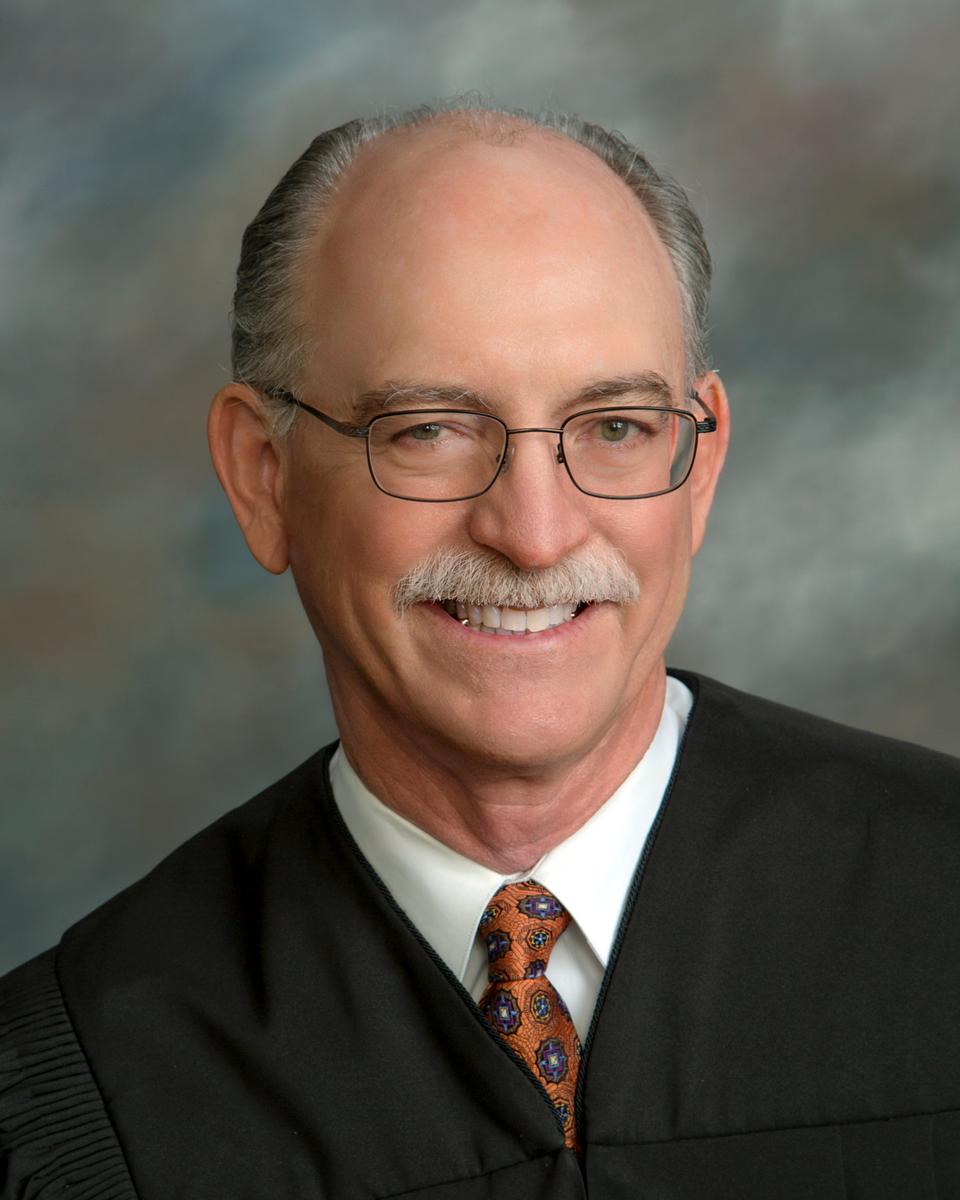
Judge Dale A. Drozd
Individual Rules, Standing Orders & Policies

Limits & Logistics
Document Limits
Courtesy Copies
Courtesy copies
- 1 copy • Upon Filing
- Hand Delivery
- Upon request
TRO Motions, Preliminary Injunction Motions
- 1 copy

Communication
Chambers
Page & Word Limits3 rules
Unless prior leave of court is obtained, all moving and opposition briefs or legal memorandum in civil cases shall not exceed 25 pages. Reply briefs filed by moving parties shall not exceed 15 pages.
- Brief
- Up to 25 pages
- Reply brief
- Up to 15 pages
Exception
More pages with leave of court
Unless prior leave of court is obtained, all moving and opposition briefs or legal memorandum in civil cases shall not exceed 25 pages. Reply briefs filed by moving parties shall not exceed 15 pages.
- Brief
- Up to 25 pages
- Reply brief
- Up to 15 pages
- Legal memorandum
Exception
More pages with leave of court
Page limits may be extended only for good cause; exceeding limits without leave may result in non-consideration.
Court's wording
Only for good cause shown will the court grant an application to extend these page limitations. Briefs that exceed the page limitations or are sought to be filed without leave of court may not be considered.
Document Format Requirements4 rules
All briefs must be submitted using Times New Roman font of no less than 12pt size. Footnotes must be no more than one size smaller than the text size.
- Font
- Times New Roman
- Font size
- 12 points
All briefs must be submitted using Times New Roman font of no less than 12pt size. Footnotes must be no more than one size smaller than the text size.
- Font
- Times New Roman
- Font size
- 12 points
- Brief
The parties’ Joint Pretrial Statement must also be e-mailed as a Word document to: dadorders@caed.uscourts.gov.
- File type
- Word
- Joint pretrial statement
Trials will be conducted in Courtroom 4 on the 15th floor. Trials will begin on Tuesdays at 9:00 a.m. Trials will be held on Tuesdays, Wednesdays, Thursdays, and Fridays.
Document Filing Requirements17 rules
The parties’ Joint Pretrial Statement must be filed seven days before the date set for the Final Pretrial Conference and must also be e-mailed as a Word document to: dadorders@caed.uscourts.gov.
Plaintiff must serve this order on all parties unless case came by removal, then defendant serves.
Court's wording
Counsel for plaintiff shall immediately serve this order on all parties, including any new parties added to the action in the future, unless this case came to the court by noticed removal, in which case defendant shall serve this order on all other parties.
A notice of motion shall contain a certification by counsel filing the motion that meet and confer efforts have been exhausted, with a very brief summary of meet and confer efforts.
Finally, no supplemental briefs shall be filed without prior leave of court.
Administrative relief motions require compliance with L.R. 233 and proposed order.
- Document
- Administrative relief motion
Must include
- •Proposed order
Court's wording
The parties are required to comply with Local Rule 233 when filing miscellaneous administrative matters. As stated in that rule, such matters may include “motions to exceed applicable page limitations; requests to shorten time on a motion; requests to extend a response deadline; requests to alter a briefing schedule; or requests to alter a discovery schedule that does not affect dispositive motion filing dates, trial dates, or the final pre-trial conference.” See L.R. 233. Parties shall comply will all procedural requirements set forth in Local Rule 233, including that a motion for administrative relief be accompanied by a proposed order. L.R. 233(a).
with the exception that proposed orders shall be submitted with motions for a temporary restraining order and motions for a preliminary injunction.
- Document
- Motion
Must include
- •Proposed order
A notice of motion shall contain a certification by counsel filing the motion that meet and confer efforts have been exhausted, with a very brief summary of meet and confer efforts.
- Document
- Notice of motion
Must include
- •Certificate of conference
Proposed orders are not required for most civil motions, but are mandatory for TRO and preliminary injunction motions.
Court's wording
The parties are not required to submit proposed orders with civil motions set for hearing before Judge Drozd, with the exception that proposed orders shall be submitted with motions for a temporary restraining order and motions for a preliminary injunction.
Ex parte applications must indicate if an opposition will be filed and include an affidavit explaining the need for the order, inability to obtain a stipulation, and why the request was not noticed on the motion calendar per Local Rule 230.
Court's wording
In addition, the document(s) must indicate whether or not an opposition will be filed. The filer shall include an affidavit indicating a satisfactory explanation for the following: (1) the need for the issuance of such an order, (2) the inability of the filer to obtain a stipulation for the issuance of such an order from other counsel or parties in the action, and (3) why such request cannot be noticed on the court’s motion calendar as provided by Local Rule 230.
including that a motion for administrative relief be accompanied by a proposed order. L.R. 233(a).
- Document
- Motion for administrative relief
Include
- •Proposed order
Joint Pretrial Statements (per Local Rule 281) must be filed 7 days before Final Pretrial Conference, include required content clarifications, and prohibit separate statements unless party is pro se.
- Document
- Joint pretrial statement
Must include
- •Exhibit list
Court's wording
In those cases in which Judge Drozd is conducting the Final Pretrial Conference, the parties are required to submit a Joint Pretrial Statement pursuant to Local Rule 281. The parties’ Joint Pretrial Statement must be filed seven days before the date set for the Final Pretrial Conference and must also be e-mailed as a Word document to: dadorders@caed.uscourts.gov. Separate pretrial statements are not permitted unless a party is not represented by counsel. The Joint Pretrial statement must cover all topics detailed in Local Rule 281 with the following clarifications: i. the parties must include a neutral joint statement of case; ii. all duplicative or overlapping exhibits between parties must be listed as joint exhibits on a separate joint exhibit list, identified as JX−1, JX−2, etc. iii. plaintiff’s exhibits shall be listed numerically, and defendant’s exhibits shall be listed alphabetically; iv. all exhibits must be identified with a reasonable amount of detail (e.g., date, Bates-stamp number, description, estimated page length) so that there is no confusion as to what exhibit is identified; v. all remaining issues (e.g., claims, affirmative defenses, forms of relief) asserted in the action must be stated under the points of law section or identified as an abandoned issue; and vi. motions in limine listed should be limited to those which the parties reasonably anticipate filing.
Plaintiff's counsel must immediately serve this order on all parties (or defendant if case is noticed removal), including newly added parties.
Court's wording
Counsel for plaintiff shall immediately serve this order on all parties, including any new parties added to the action in the future, unless this case came to the court by noticed removal, in which case defendant shall serve this order on all other parties.
In addition, parties shall provide proposed consent decrees where applicable, and proposed findings of fact and conclusions of law following
Must include
- •Proposed consent decree
- •Proposed findings of fact and conclusions of law
Proposed orders not required for civil motions except for TROs and preliminary injunctions.
Court's wording
The parties are not required to submit proposed orders with civil motions set for hearing before Judge Drozd, with the exception that proposed orders shall be submitted with motions for a temporary restraining order and motions for a preliminary injunction.
Judge Drozd does not issue tentative rulings.
All motions shall be noticed for hearing. It is not necessary to clear a date prior to scheduling a civil law and motion matter for hearing.
Ex parte applications require affidavit explaining need and inability to obtain stipulation.
Court's wording
The filer shall include an affidavit indicating a satisfactory explanation for the following: (1) the need for the issuance of such an order, (2) the inability of the filer to obtain a stipulation for the issuance of such an order from other counsel provided by Local Rule 230.
Filing & Service rules
Courtesy Copy Requirements
TRO/injunction papers require courtesy copy to chambers.
Parties seeking emergency or provisional relief shall comply with Federal Rule of Civil Procedure 65 and Local Rule 231. The court typically will not rule on any application for such relief for at least twenty-four (24) hours after the party subject to the requested order has been served; such party may file opposing or responding papers in the interim. The parties shall lodge a courtesy copy with chambers of all papers relating to proposed TROs and injunctions, conformed to reflect that they have been filed.
Civil cases
Courtesy copies required for documents exceeding 25 pages.
Counsel shall have delivered to the Clerk’s Office clearly marked conformed courtesy copies of all manually filed documents and courtesy copies of all electronically filed documents that exceed twenty-five (25) pages (including exhibits and attachments), bearing the ECF date/page stamp at the top of the page, by either personally delivering them or sending them by guaranteed overnight delivery.
Civil cases
All papers related to proposed TROs and injunctions must be lodged as courtesy copies with chambers, conformed to show they have been filed.
The parties shall lodge a courtesy copy with chambers of all papers relating to proposed TROs and injunctions, conformed to reflect that they have been filed.
Civil cases
Page 3 | G. TROs and Injunctions
Parties are prohibited from sending courtesy copies unless the court specifically directs them to do so.
Parties are directed not to send any courtesy copies unless specifically directed to do so by the court.
Civil cases
Page 3 | F. Courtesy Copies
No courtesy copies needed for answers or shorter pleadings.
The parties need not provide courtesy copies of answers or shorter pleadings.
Civil cases
No signature required for overnight courtesy copies.
If a courtesy copy is sent by guaranteed overnight delivery, the sender shall notify the delivery service that the signature of the recipient is not required.
Civil cases
Sealing & Redaction Procedures
No document will be sealed, nor shall a redacted be filed, without the prior approval of the court. If a document for which sealing or redaction is sought relates to the record on a motion to be decided by Judge Drozd, the request to seal or redact should be directed to him and not the assigned Magistrate Judge.
No document will be sealed, nor shall a redacted be filed, without the prior approval of the court. If a document for which sealing or redaction is sought relates to the record on a motion to be decided by Judge Drozd, the request to seal or redact should be directed to him and not the assigned Magistrate Judge.
Civil cases
All requests to seal or redact documents require prior court approval, must comply with Local Rules 140 and 141, and follow specified electronic filing and email submission procedures.
No document will be sealed, nor shall a redacted be filed, without the prior approval of the court. If a document for which sealing or redaction is sought relates to the record on a motion to be decided by Judge Drozd, the request to seal or redact should be directed to him and not the assigned Magistrate Judge. All requests to seal or redact shall be governed by Local Rules 141 (sealing) and 140 (redaction). Protective orders covering the discovery phase shall not govern the filing of sealed or redacted documents on the public docket. The court will only consider requests to seal or redact filed by the proponent of sealing or redaction. If a party plans to make a filing that includes material an opposing party has identified as confidential and potentially subject to sealing or redacting, the filing party shall provide the opposing party with sufficient notice in advance of filing to allow for the seeking of an order of sealing or redaction from the court. Pursuant to Local Rule 141, a Notice of Request to Seal Document(s) must be filed electronically. The Request to Seal, a proposed sealing order (in Word), and all documents covered by the request must be emailed to dadorders@caed.uscourts.gov. If the request is approved and notice of electronic filing of the sealing order is received, all documents covered by the order must be emailed to ApprovedSealed@caed.uscourts.gov for filing under seal.
Civil cases
Page 4 | V. SEALING, REDACTING, AND PROTECTIVE ORDERS
Protective orders don't govern sealed/redacted filings; only proponent can request.
Protective orders covering the discovery phase shall not govern the filing of sealed or redacted documents on the public docket. The court will only consider requests to seal or redact filed by the proponent of sealing or redaction.
Civil cases
Pre-Motion Conference Requirements
Pre-filing meet and confer required for motions in cases with represented parties.
Prior to filing a motion in a case in which the parties are represented by counsel, counsel shall engage in a pre-filing meet and confer to discuss thoroughly the substance of the contemplated motion and any potential resolution.
Civil cases
Counsel must conduct a pre-filing meet and confer on motion substance before filing any motion in cases where all parties are represented.
Prior to filing a motion in a case in which the parties are represented by counsel, counsel shall engage in a pre-filing meet and confer to discuss thoroughly the substance of the contemplated motion and any potential resolution. Counsel should resolve minor procedural or other non-substantive matters during the meet and confer process so that briefing on motions that proceed to hearing is directed only to those substantive issues requiring resolution by the court.
Civil cases
Page 2 | I. LAW AND MOTION C. Meet and Confer Requirement
Motions in limine are prohibited from being filed prior to the pretrial conference.
The parties shall not file motions in limine prior to the pretrial conference.
Civil cases
Page 5 | A. Pretrial Statements and Final Pretrial Conference
Chambers Communication Rules
Sealing requests require electronic Notice and email to dadorders@caed.uscourts.gov.
Pursuant to Local Rule 141, a Notice of Request to Seal Document(s) must be filed electronically. The Request to Seal, a proposed sealing order (in Word), and all documents covered by the request must be emailed to dadorders@caed.uscourts.gov. If the request is approved and notice of electronic filing of the sealing order is received, all documents covered by the order must be emailed to ApprovedSealed@caed.uscourts.gov for filing under seal.
Civil cases
Ex parte applications require notice to courtroom deputy and opposing party.
Ex parte applications typically are not heard but are submitted by the court unless otherwise notified. The filer is required to contact the courtroom deputy and the opposing party prior to the filing of the ex parte application in order to advise that such request is being made.
Civil cases
Joint Pretrial Statements must be emailed to chambers at dadorders@caed.uscourts.gov.
The parties’ Joint Pretrial Statement must also be e-mailed as a Word document to: dadorders@caed.uscourts.gov.
Civil cases
Page 5 | A. Pretrial Statements and Final Pretrial Conference
The Courtroom has a variety of audio/visual equipment available to use for trial purposes. Available equipment includes: ELMOs, projectors, plasma screens, microphones, assisted listening devices and laptop connections. Attorneys should arrange through the Courtroom Deputy a time to meet with court Information Technology staff for training on electronic equipment prior to trial.
The Courtroom has a variety of audio/visual equipment available to use for trial purposes. Available equipment includes: ELMOs, projectors, plasma screens, microphones, assisted listening devices and laptop connections. Attorneys should arrange through the Courtroom Deputy a time to meet with court Information Technology staff for training on electronic equipment prior to trial.
Civil cases
Page 6 | VII. TRIAL
Counsel must arrange with Courtroom Deputy for clearance to bring large items to courtroom.
To bring large physical items, demonstrative exhibits, or electronic equipment, etc., to the courtroom, counsel must make arrangements with the Courtroom Deputy, who will contact Court Security for clearance to enter the building with the items.
Civil cases
Page 6 | VII. TRIAL
Filing party must notify opposing party before filing confidential material.
If a party plans to make a filing that includes material an opposing party has identified as confidential and potentially subject to sealing or redacting, the filing party shall provide the opposing party with sufficient notice in advance of filing to allow for the seeking of an order of sealing or redaction from the court.
Civil cases
Parties receive hearing Zoom credentials via email from courtroom deputy Pete Buzo at PBuzo@caed.uscourts.gov.
Parties will receive a Zoom ID number and password for the hearing by email from Judge Drozd’s Courtroom Deputy Pete Buzo (PBuzo@caed.uscourts.gov).
Civil cases
Page 1 | I. LAW AND MOTION A. Calendar
Sealing requests and proposed sealing orders in Word format must be emailed to dadorders@caed.uscourts.gov.
The Request to Seal, a proposed sealing order (in Word), and all documents covered by the request must be emailed to dadorders@caed.uscourts.gov.
Civil cases
Page 4 | V. SEALING, REDACTING, AND PROTECTIVE ORDERS
Approved sealed documents must be emailed to ApprovedSealed@caed.uscourts.gov for filing under seal.
If the request is approved and notice of electronic filing of the sealing order is received, all documents covered by the order must be emailed to ApprovedSealed@caed.uscourts.gov for filing under seal.
Civil cases
Page 4 | V. SEALING, REDACTING, AND PROTECTIVE ORDERS